 Polski
  Deutsch
  Čeština
  Slovenčina
  Français
  Italiano
  Български
  Magyar
  Română
  Українська
 How to light your home library and reading space?
Reading is one of those activities that truly allows you to pause—to break away from everyday life and immerse yourself in a story. To fully enjoy reading, it's important to ensure the right lighting. Good lighting isn't just comfortable for your eyes, but also essential for mood and concentration. In this article, we'll suggest how to choose the right lighting for various reading spaces—from a living room armchair to an entire home library. This way, you can read in peace—and without compromise.
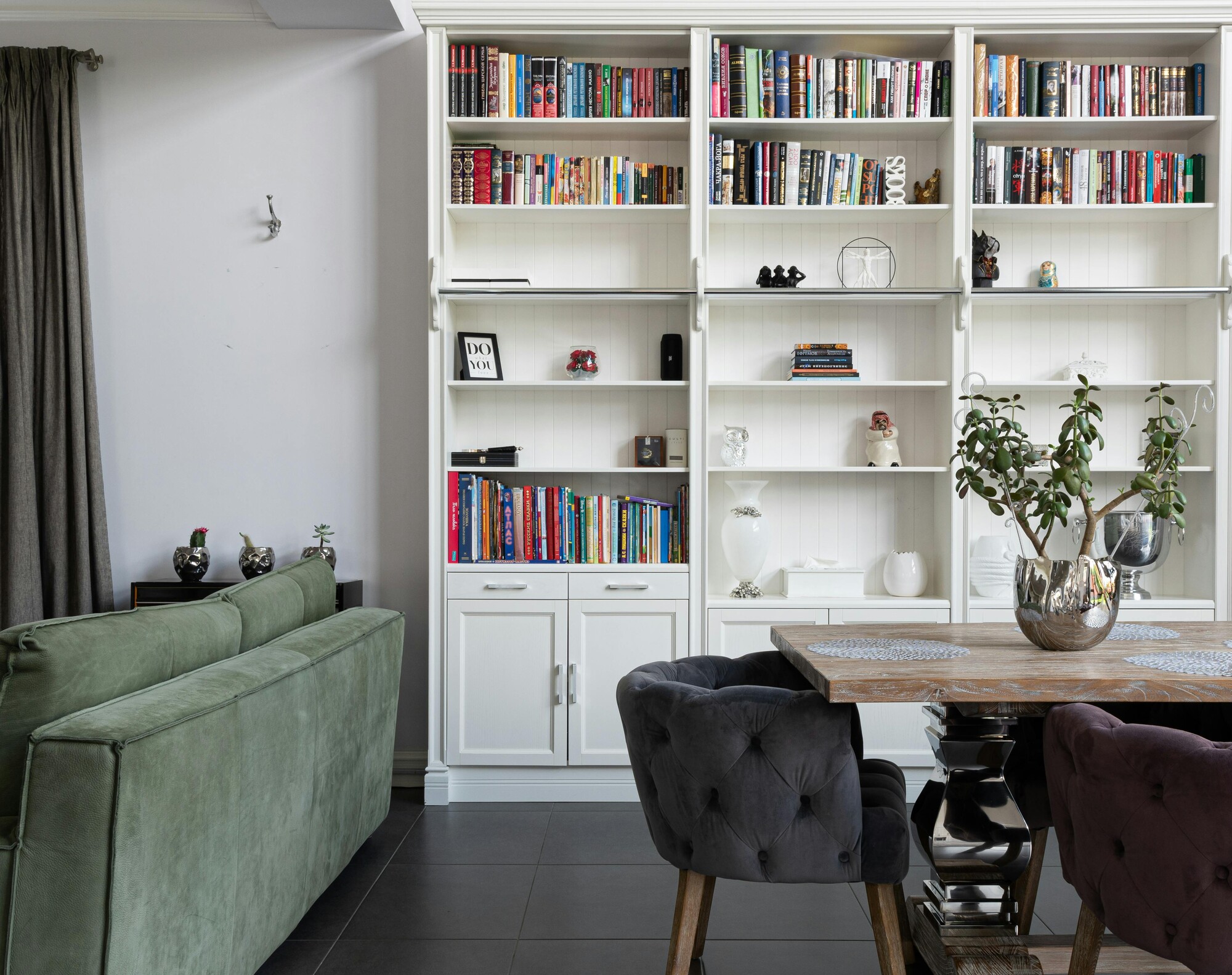
Localized Lighting – Concentrated Light for You
While the overall atmosphere is important in libraries and reading rooms, what matters most is what's happening right next to us – near the book, on the pages we're currently turning. That's why a key element of any reading area should be localized lighting, meaning one that precisely illuminates a selected surface without spilling out across the entire room.
The Kanlux PHLOX is perfect for this role – a luminaire with a narrow beam of light, designed for spot lighting. The Kanlux PHLOX shines precisely where you want it – without distraction, glare, or disturbing other household members. You can mount it directly above an armchair, above a work table, or even by the bed if you like to read before bed. This allows the light to be a discreet companion – present but not intrusive.
Importantly, luminaires with such a narrow beam angle are perfect not only for minimalist, modern interiors. Thanks to their subtlety, they work equally well in classic settings – where form matters less than function and ease of use. And yet, reading is all about comfort and concentration.
When choosing a spotlight, remember to consider not only the angle of light, but also its color. Neutral (4000K) or warm (2700–3000K) light is best for reading – this light temperature promotes relaxation and doesn't cause eye strain, even during long reading sessions.
Wall Lamps for Reading – Functional and Decorative
If you have a favorite reading nook at home – an armchair in the corner of the living room, a sofa in the bedroom, or a bed you curl up in with a book before bed – consider installing a wall lamp. It's one of the most practical and underrated ways to comfortably illuminate reading areas.
Unlike floor or table lamps, a wall lamp doesn't take up space – this is especially important in small rooms or near beds, where every free space counts. At the same time, a well-designed wall lamp provides spotlight directed exactly where you need it – without having to move the lamp and without spilling light across the entire room.
The Kanlux LAURIN is perfect for such applications – an elegant wall lamp with a simple, timeless design. Its shape makes it suitable for both modern and classic interiors. The Kanlux LAURIN is also a good solution for a child's room – especially if reading a story in the evening is a daily ritual. It's worth remembering a few rules:
● Mount the wall lamp at the appropriate height – ideally at head height for a person sitting or lying down, so that the light falls directly on the book without blinding the eyes.
● Choose a model with adjustable beam direction – this will allow you to adapt the lighting to your reading style.
● Choose a light color that promotes relaxation – warm shades are essential, especially when reading before bed.
A wall lamp can be more than just a functional light source – it can become a subtle design element that complements the atmosphere of a library or bedroom. And above all: it will make every moment spent with a book even more enjoyable.
Small Libraries – Shelf and Bookcase Lighting
Not everyone has room for a dedicated bookcase. Sometimes a library is simply a well-designed wall in the living room, a small bookcase in the bedroom, or a row of shelves in the hallway. However, this doesn't mean it doesn't deserve adequate lighting – quite the opposite! Directional lighting works best in such spaces, allowing you to precisely illuminate specific sections of the bookcase.
Directional lighting – spotlights directed exactly where you want it – helps bring out the beauty of books and create an atmospheric space where you want to linger, even if only for a moment. Properly selected lamps allow you to direct light directly onto the spines of books, allowing for better visibility of titles and highlighting the structure and aesthetics of the entire bookcase.
This solution also has other advantages:
● Increases functionality – it's easier to find a specific book after dark, without having to illuminate the entire room.
● Creates atmosphere – a pleasant glow creates a cozy atmosphere, perfect for relaxation. ● Showcases what's important – directional lighting can bring out the most valuable items on shelves – not only books, but also souvenirs, photos, and small decorations.
It's worth considering installing several adjustable spotlights – especially those that can be discreetly hidden in built-in furniture or mounted on the ceiling, directing the light at the right angle.
If you treat your bookshelf as a showcase for your home, precise lighting will allow you to truly showcase it – without overdoing it. Subtle, functional, and with character.
A Library as a Separate Room – Track Systems in the Starring Role
If you can designate a separate room in your home as a library, you have the opportunity to create a space that is not only atmospheric but also fully functional. It's precisely in such interiors – multifunctional, variable, often combining reading, work, and relaxation – that track systems with directional fixtures are perfect.
Why choose them? Because they enable:
● precise adjustment of lighting to the layout of shelves, desks, and lounge areas,
● adjustment of the angle and direction of light,
● flexible modifications in the future – without having to rework the entire installation.
To make selecting the right components and their configuration even easier, we've created the Kanlux TEAR configurator – an interactive online configurator. With it, you can:
● select all the components of the track system step by step,
● check their compatibility,
● see how they will function together in your space. This solution will be particularly appreciated by those who appreciate awareness and control over their lighting – both functionally and aesthetically. Combined with modern directional fixtures, the track system becomes the perfect support for any home library – one that lives with its residents and evolves with their needs.
If your library is more than just bookshelves, invest in lighting that keeps up with you. And the Kanlux TEAR configurator will help you plan it your way – precisely, conveniently, and without unnecessary compromises.
Floor Lamps – Light Where You Need It
There are days when you don't need to turn on all the lights in the room. A single light source is enough – placed exactly where you and your book are. Floor lamps are the perfect solution for those who value mobility, flexibility, and aesthetics. Unlike fixed fixtures, floor lamps can be easily moved to suit your changing needs and interior layout.
When looking for the perfect model for reading, it's worth considering the functionality of adjusting the light direction. That's why we recommend the Kanlux JUSI – a floor lamp designed for users who demand precision.
The JUSI has an arm that tilts 40°, and the lampshade itself can be rotated up to 180°. This design allows you to precisely direct the light towards your book, notes, crafts, or tablet. When you want more diffused light, simply redirect the lampshade towards the wall. This convenient and intuitive solution allows you to instantly change the ambiance of a room. If you're looking for a more classic model that will fit seamlessly into almost any interior, consider the Kanlux EVALO – a slim, modern lamp with a subtle look. It doesn't overwhelm the décor, yet creates an aesthetic balance between light and space. EVALO is a choice for those who value simplicity, tranquility, and functionality – without sacrificing good design.
Floor lamps are best placed:
● next to an armchair or sofa – at a height that allows the light to shine directly onto the book,
● near a bookcase – as spotlighting on shelves or as atmospheric background lighting,
● in a bedroom – instead of a night lamp, especially if space is limited on a dresser.
Their biggest advantage? They can be easily moved – from room to room, from one corner to another. This means the light will always be where you are – whether you're reading a novel, flipping through an album, or working on your laptop.
When creating a reading space – whether it's a living room armchair, a bedroom nook, or a full-size library – light should always serve both a practical and emotional purpose. It must be strong enough to be easy on the eyes, but also subtle enough not to disturb the atmosphere of peace, concentration, and tranquility.
Remember these few rules:
● Use localized light – spotlights, precisely directed at the book;
● Choose wall lamps with the right light angle – ones that you can adjust;
● Illuminate shelves and bookcases with directional light – with both display and functionality in mind;
● In larger rooms, opt for track systems;
● Use adjustable floor lamps – mobile, flexible, and designed with readers in mind.
Reading at home is not just an activity – it's a ritual and a way to be with yourself. Good light doesn't impose itself – it accompanies you. It's present when you turn the next page. When you search for your favorite quote. When you go back to your childhood with a book from years ago.
Other articles
 How to light your home library and reading space?
Reading is one of those activities that truly allows you to pause—to break away from everyday life...
 Lighting for Mezzanine Floors and High Spaces — Challenges and Solutions
Not every space has the grandeur of a cathedral — and that is quite fortunate. Low interiors, mezzanine...
 Staircase and Corridor Lighting — Safety and Design
Stairs, corridors and other passageways have specific lighting requirements. This is not only for safety...
 Smart lighting management in your home – where to start?
Smart lighting systems are not only a matter of convenience, but also a conscious step towards better...
 How does LED lighting work?
The LED lighting in our homes, offices and public areas is here to stay. Today, it is hard to imagine...
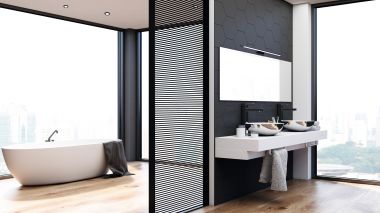 How can lighting create a spa atmosphere in your bathroom?
When designing a bathroom, not only aesthetics but also lighting matter—when selected appropriately,...
